Eliminating On-Camera Stress: 3 Exercises to Engineer Your Media Presence
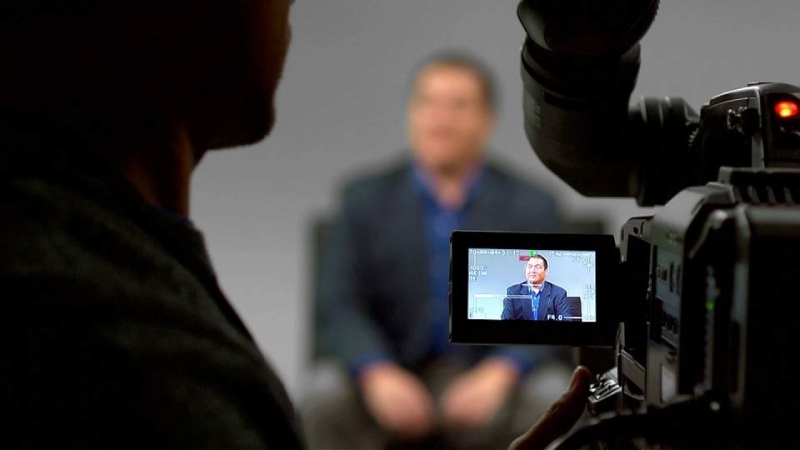
Even media professionals can suddenly freeze the moment a red light blinks on. And the usual advice — “just breathe” — often lands like a motivational poster on a bad day: nice in theory, useless in practice.
That’s because on-camera stress isn’t about a single moment of panic; it’s a full-system breakdown of the mind–body algorithm that governs performance under pressure.
To eliminate that breakdown, you need a plan that trains the mind, body, and voice as one. A structured warm-up routine acts like a pre-flight safety check—activating your mental clarity, stabilizing your vocal tone, and grounding your physical presence so you step in front of the camera already primed for impact.
Why “Just Take a Breath” Isn’t the Fix?
Camera stress isn’t a mood; it’s a biological-cognitive duet spiraling out of sync. Your heart rate spikes, your breathing goes off-beat, your muscles tighten. Then your mind joins the chaos: scattered focus, performance fear, and the classic “What if I mess this up?” soundtrack.
Deep breathing alone can't recalibrate the entire system.
High-performing presenters rely instead on what we call the Media Performance Triad:
- Mind: Clear thinking, quick decision-making under pressure, and converting anxiety into strategic focus.
- Voice: Resonance, control of tone and pace, and using vocal warm-ups to enhance credibility and confidence.
- Body: Professional body language—balanced posture, composed hand movements, and signals of calm authority that improve on-camera presence.
Achieving true on-camera calm requires re-engineering this triad through mental warm-ups combined with voice exercises and vocal activation techniques. These practices recalibrate physical and cognitive responses, transform stress into positive energy, and elevate emotional intelligence (EQ), enabling the presenter to maintain control and confidence even before broadcasting begins.
Mental Warm-Up: Winning the Battle Before “Second Zero”
One of the biggest sources of on-camera tension is the collision between your personal and professional selves. When these two identities overlap, it becomes harder to stay emotionally neutral — which leads to overreacting, overthinking, or tripping over words.
Enter the Emotional Decoding Exercise.
It separates the leader (professional identity) from the speaker (personal identity), providing a clear mental framework to operate from—the result: higher emotional intelligence, reduced noise, and sharper decision-making during live performances.
A simple but powerful tool here is the Strategic Positioning Matrix, built on three grounding questions:
- What is the primary purpose of my appearance today?
- How do I want the audience to feel and interpret my message?
- What key points must I deliver with clarity and confidence?
These questions work like a mental GPS: they align your message, reduce stress, and help convert nervous energy into intentional presence.
Pair the mindset work with vocal priming and body activation, and you get a presenter who moves with purpose, communicates clearly, and radiates composure even in high-pressure, high-visibility moments.
Voice & Body Warm-Up: The Architecture of Confidence
After mental activation, the next step is mastering the voice and body—critical elements for eliminating on-camera stress and building a strong, trustworthy media presence.
A shaky voice. Uneven breathing. Stiff shoulders.
These aren’t just signs of stress — they are the stress. And they quietly erode credibility.
Here, the Vocal Anchor Exercise becomes essential. It is the fastest method to stabilize tone, pace, and vocal resonance, eliminating shaky or reactive vocal patterns. It involves a sequence of vocal-breath movements, resonance drills, tone-control exercises, and rhythm modulation. These techniques form a core part of any pre-appearance vocal warm-up.
This exercise transforms anxiety into positive energy, boosting presence and increasing audience trust.
Think of it as upgrading your voice from “nervous presenter” to “executive on-air.”
The Body Reset Exercise focuses on subtle energy-release movements to channel stress-induced adrenaline, creating open, stable, and commanding body language. It includes strategic posture alignment, balanced standing, coordinated hand-shoulder movement, and controlled facial expressions to avoid unintentionally signaling stress.
When combined with the mental warm-up, this exercise enables full control over non-verbal communication, helping presenters interact confidently and naturally with the camera.
Integrating both exercises activates the entire Media Performance Triad: a clear mind, a resonant and controlled voice, and a strong, steady physical presence. These methods not only help presenters perform under pressure but also transform every media appearance into a compelling, credible experience—enhancing vocal control, professional body language, EQ, and overall strategic delivery, while dissolving any on-camera tension.
Media Coaching: Your Operating System for Consistent On-Camera Mastery
Once mental, vocal, and physical warm-up exercises are adopted, it becomes clear that these techniques are not isolated steps—they are an integrated system for re-engineering media performance, forming the foundation for eliminating on-camera stress with precision and long-term consistency.
This is where specialized media coaching from AndGrow steps in. It does not offer generic advice or surface-level tips; instead, it programs and optimizes your internal system to ensure full control over the mind, voice, and body—the Media Performance Triad. This approach ensures that every on-camera appearance becomes consistent, impactful, and fully composed, free from sudden stress or unstable delivery, while elevating emotional intelligence (EQ) throughout the performance.
Through personalized one-to-one training, coaches address your specific pressure points:
- Emotional regulation
- Tone consistency
- Message positioning
- Professional body language
- EQ activation
- Pre-appearance vocal preparation
- Camera-stress reduction
The goal is not just to eliminate stress — it’s to translate it into performance fuel.
The result? A presenter who can think clearly, respond smartly, recover instantly, and communicate with authority—even in unpredictable live moments.
AndGrow coaches don’t just prepare you for the camera.
They engineer high-stakes readiness, transforming you into someone who consistently delivers polished, credible, and emotionally intelligent media performances across any platform.
Your On-Camera Edge Is Built, Not Born
On-camera mastery isn’t luck, talent, or “having a good day.”
- It’s a system.
- A warm-up.
- A recalibration of your internal operating code.
Stress is simply a notification — your body’s version of a push alert — telling you to activate the warm-up sequence.
With the right coaching, that sequence becomes automatic.
By integrating mental warm-ups, vocal activation, and physical alignment, you gain full control over your presence — transforming tension into momentum, anxiety into command, and every appearance into a moment of strategic impact.
Your next media moment shouldn’t be left to chance.
- Make it engineered.
- Make it intentional.
- Make it unforgettable.
Book your session with an AndGrow expert — and step into the studio with confidence that feels earned, embodied, and unmistakably camera-ready.
This article was prepared by coach Ibrahim Mohamed, a certified coach from Andgrow.
Lets help you
Lets help you
Achieve your goals and get the support you need. Contact us and start the journey of change you want.
Contact us now
Recent Blogs

What is Coaching? What are the Responsibilities of the Coach?
What is coaching? And what does it mean to be a good coach? How can you be a coach? If you are wondering about this, Read more

Outsmart the Machine: Why Your Next Competitor Isn’t AI, but Someone Who Knields It Better?
“Artificial intelligence will automate routine tasks, freeing humans to focus on strategic work.” That line used to sound like something out of a keynote speech. Read more

Premortem Power Hour: Turning Project Risks into Strategic Foresight
A Premortem session is one of the most effective tools for proactive project planning and risk management. It allows teams to anticipate potential setbacks before Read more
Subscribe to our Newsletter
Write your email and click on Subscribe
Subscribe now to get the latest articles, research, and products that make you stronger than ever
